Status note: This article is not sleep or health advice. Neeko's story and calm-pacing approach is a design example; we make no promises about sleep outcomes, and Neeko does not replace a parent's routine.
One of the day's slowest moments comes as the lights dim, with that familiar request: "Can you tell me one more?"
Bedtime stories are not just entertainment for children. They are a routine that softens the rhythm of the day, carries imagination into a safe space, and strengthens the bond between parent and child.
Why is story time so precious?
A good bedtime routine is mostly about slowing down. Rather than a stream that pushes a child's attention even higher, an experience that calms them and gently carries their mind into an imaginary world makes more sense.
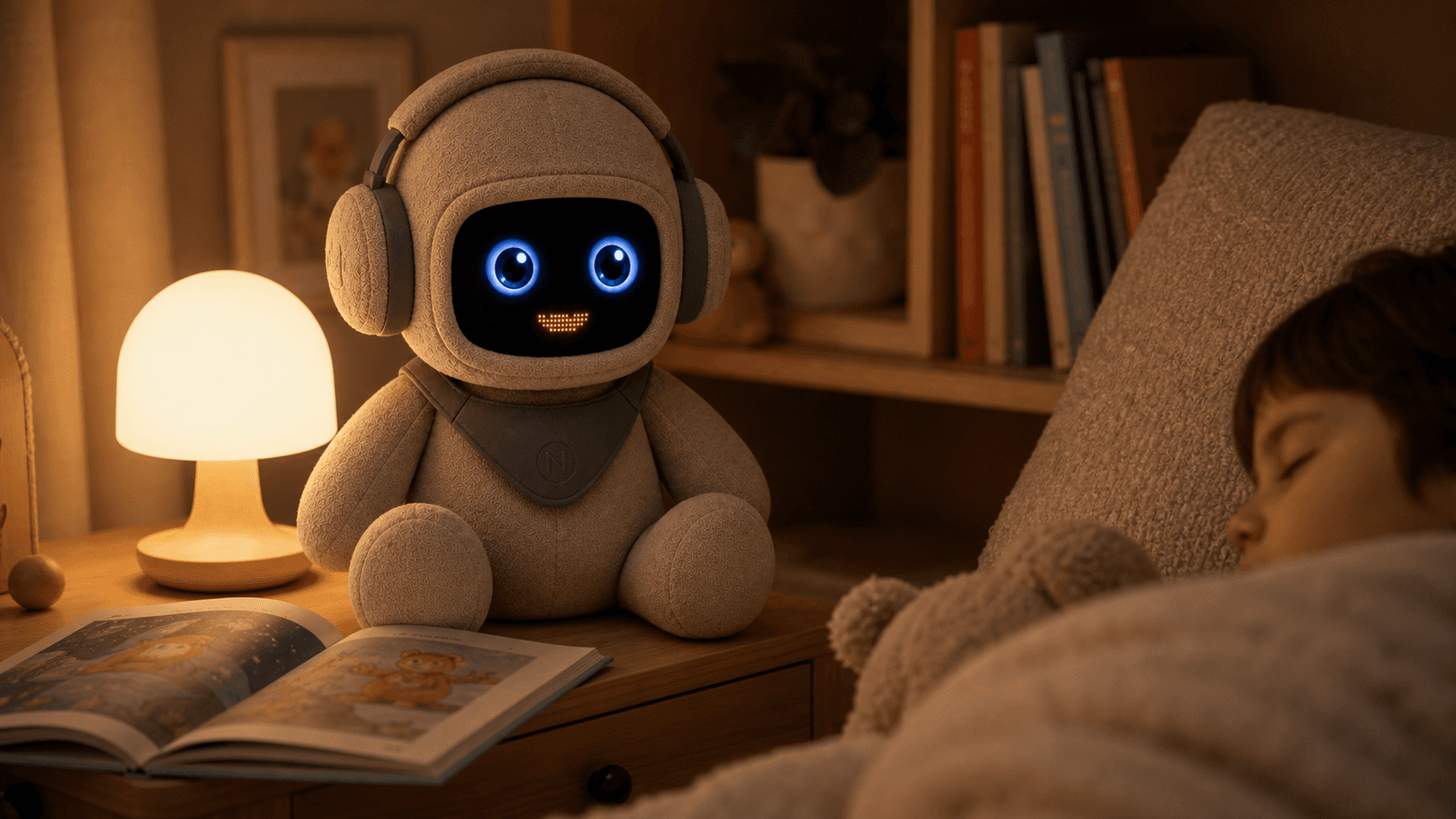
Neeko's goal on the story side isn't just to deliver content, but to build a softer storytelling pace within the boundaries the parent sets. We will separately measure its effect in real-world use.

Why can a voice-based story feel different?
A spoken story, especially in a bedtime routine, can offer a less disruptive experience because it is screen-free. Instead of fixing a child's eyes on a surface, it leaves room for them to build the scenes in their own mind. That turns the story into something imagined together, not just watched.
Why does the parent side matter?
Bedtime is as sensitive for the parent as it is special for the child. That's why it matters for parents to have a say over the tone, scope, and overall framing of the story experience.
At Neeko, we see storytelling as a limited content area the parent can choose. Neeko doesn't run the routine; it only aims to offer a short story example in the right tone, if the family wants one.